About Coconut Shell Activated Carbon
Coconut Shell based premium activated carbon is high density durable carbon filter media capable of withstanding the abrasion and backwashing. Its exceptionally high internal surface area with optimum pore size facilitates the adsorption of tastes, odors and dissolved organic chemicals from municipal and industrial water supplies. It requires periodic backwashing to eliminate accumulated suspended matter and to re-grade the filter bed. It may be used in either domestic or industrial applications using gravity flow or pressurized filter vessels.
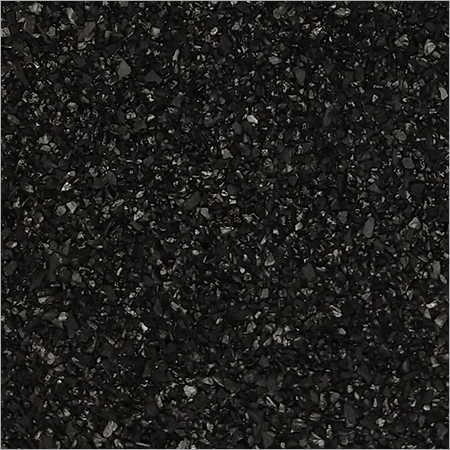
Physical Properties:- Appearance: Black Granular
- Iodine Number: 1000 to 1150 IV
- Bulk Density: 350- 450 Kg/m3
- Hardness: 99%
- Ash Content: 3%
- pH: 9-11
- Moisture: 3- 5%
- Platelet Content: 2%
Advantages :- Removes undesirable taste and odor
- Removes suspended particles and dissolved organic chemicals
- Filter waters having a wide range of pH levels
- Large surface area results in high capacity and efficiency
- Balanced pore structure gives a efficient adsorption range
- Losses due to attrition is minimum
Size Available- 2 mm 4 mm
- 1 mm 2 mm
- 0.5 mm 1 mm
Coconut Shell Activated Carbon delivers high adsorption efficiency due to its large microporous surface area and iodine number. The product exhibits reliable removal of impurities, odors, and contaminants, making it a preferred choice for water and air purification, beverage processing, and even precious metal recovery in mining industries.
Versatile Granular Structure and SizesThe granular, irregular form of this activated carbon allows compatibility with various industrial systems. Available in mesh sizes like 4x8, 6x12, and 8x30, it suits different flow rates and filtration requirements. This adaptability enables effective performance in both large-scale industrial and compact filtration setups.
Tailored Packing and Reliable StrengthWith customizable packing options (25 kg, 50 kg bags), transportation and storage are simplified. The products high mechanical strength and low attrition contribute to longer service life, reducing replacement needs and operational costs for manufacturers, traders, and end-users across India.
FAQs of Coconut Shell Activated Carbon:
Q: How is coconut shell activated carbon primarily used in purification processes?
A: Coconut shell activated carbon is extensively utilized in water and air purification systems due to its high microporosity and large surface area. It efficiently removes contaminants, chlorine, organic compounds, and odors from water and gases, ensuring cleaner outputs in municipal, industrial, and household environments.
Q: What are the typical applications and benefits of using this activated carbon in industry?
A: This carbon is widely applied in water and air purification, gold and solvent recovery, and food & beverage processing. Its benefits include high adsorption capacity, mechanical strength, low ash content, and chemical purity, which lead to enhanced system efficiency, longer filter life, and improved end-product quality.
Q: When should coconut shell activated carbon be selected over other types of activated carbon?
A: It should be chosen when high adsorption efficiency, low dust content, and long service life are required, especially in applications demanding taste and odor removal or trace contaminant elimination. Its granule strength and low attrition rate make it ideal for both fixed-bed and moving-bed operations.
Q: Where can I source coconut shell activated carbon in India, and what packaging options are available?
A: You can source this product from dealers, exporters, manufacturers, suppliers, traders, and wholesalers across India. It is typically packed in 25 kg or 50 kg bags, with customized packaging options available to suit specific volume or logistical requirements.
Q: What is the process behind producing coconut shell activated carbon?
A: The production process involves carbonizing selected coconut shells at high temperatures, followed by activation using steam or physical agents. This develops a high surface area with microporous structures, resulting in enhanced adsorption efficiency and robust mechanical properties.
Q: How does the products physical and chemical properties contribute to its effectiveness?
A: Its high surface area, microporous nature, low ash content, and high mechanical hardness allow maximal contaminant adsorption with minimal product loss. The stable, non-shrinking structure ensures consistent performance across a broad range of temperatures and applications.




 Send Inquiry


 Send Inquiry


