About Charcoal Activated Carbon
Charcoal based activated carbon is carbon filter media capable of withstanding the abrasion and backwashing. Its internal surface area with optimum pore size facilitates the adsorption of tastes, odors and dissolved organic chemicals from municipal and industrial water supplies. It requires periodic backwashing to eliminate accumulated suspended matter and to re-grade the filter bed. It may be used in either domestic or industrial applications using gravity flow or pressurized filter vessels.
Advantages - Removes undesirable taste and odor
- Removes suspended particles and dissolved organic chemicals
- Filter waters having a wide range of pH levels
- Large surface area results in high capacity and efficiency
- Balanced pore structure gives a efficient adsorption range
- Losses due to attrition is minimum
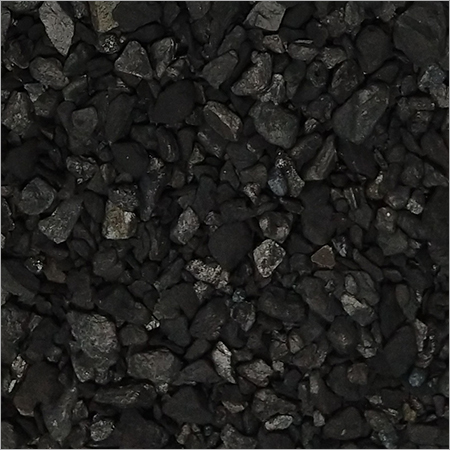
Physical Properties- Appearance : Black grains
- Bulk Density: 450- 650 Kg/m3
- Ash Content: 5- 15%
- Iodine Number: 450 to 900 IV
- Moisture: 5- 12%
Size Available- 2 mm 4 mm
- 1 mm 2 mm
- 0.5 mm 1 mm
Charcoal activated carbon is engineered for exceptional adsorption due to its large internal surface area and high porosity. It efficiently removes impurities and contaminants from liquids and gases, making it invaluable in processes like water purification and air filtration. Its high methylene blue value (150250 mg/g) and iodine number indicate substantial adsorption efficiency for organics and dissolved substances.
Quality Guaranteed and DurableWith purity levels reaching up to 98% and hardness rated between 8595% (ASTM carbon hardness), this activated carbon demonstrates high mechanical strength and strong crush resistance. Dimensionally stable at room temperature and with ash content below 10%, it ensures reliable long-term performance without significant structural degradation during repeated use.
Versatile Industrial ApplicationsThis activated carbon finds broad use in industries including pharmaceutical, food processing, and chemical production. It is leveraged for gas and water purification, gold recovery, and controlling color in food and beverage manufacturing. Its low moisture content (5%) and apparent density (450600 kg/m) make it practical for various production and filtration requirements.
FAQs of Charcoal Activated Carbon:
Q: How is Charcoal Activated Carbon with an iodine number of 9001200 mg/g used in water purification?
A: This grade of activated carbon excels at adsorbing dissolved organic compounds and impurities in water, removing odors, colors, and harmful chemicals. Its high surface area facilitates effective filtration in municipal, industrial, and residential water treatment systems.
Q: What are the common forms and particle sizes available for this activated carbon?
A: Charcoal activated carbon is available in powder (<325 mesh), granular (48 mesh), and pellet forms. The particle size selected depends on the specific application, with granular preferred for filtration and powder for rapid adsorption in liquid-phase processes.
Q: When should activated carbon be replaced in purification systems?
A: It should be replaced when adsorption efficiency declines, typically after the carbon becomes saturated with contaminants. Depending on use and conditions, shelf life extends up to 3 years with proper storage in a cool, dry area away from oxidants.
Q: Where can this activated carbon be applied beyond water treatment?
A: Beyond water purification, it is widely used in air filtration, pharmaceutical manufacturing, food processing, gas purification, gold recovery, and various chemical industry operations, owing to its high purity and excellent adsorption properties.
Q: What is the process behind the high adsorption efficiency of this activated carbon?
A: The activation process creates a highly porous structure and large internal surface area, enhancing its ability to trap and hold diverse impurities and molecules through physical adsorption and chemical interactions.
Q: How does this activated carbon benefit industrial and commercial users?
A: Its high purity, mechanical strength, and large adsorption capacity contribute to increased product quality, process efficiency, and regulatory compliance, delivering clean water, air, and chemicals for numerous applications.




 Send Inquiry


 Send Inquiry


